
Domi Domi

What Are the Best China Outdoor Canopy Manufacturers?

Time:2026-09-19 Author:Liam
0%

When buyers search for reliable China outdoor canopy manufacturers, product photos rarely tell the whole story. An Out Door Canopy may look strong online, yet its frame, fabric, drainage, and joining methods decide its real performance. This guide introduces practical ways to compare suppliers before placing an order. It focuses on construction quality, customization, communication, and long-term service.

Experienced buyers should examine more than catalogs. Ask for material specifications, production photos, sample details, and recent quality records. Check whether aluminum or steel components match the stated thickness. Inspect welds, corner joints, stitching, zippers, and anchor points closely. Fabric should be assessed for UV resistance, water protection, color stability, and cleaning requirements. Wind and snow conditions also matter. A canopy designed for one region may perform poorly in another.

Small details matter.

Reliable manufacturers usually explain their testing process clearly. They can discuss factory capacity, lead times, packaging methods, replacement parts, and after-sales support without avoiding difficult questions. Buyers should also confirm applicable standards and documentation for the destination market. A polished sample does not guarantee consistent mass production. That is an uncomfortable but important truth. Even capable factories can experience communication gaps, material substitutions, or delayed updates. Therefore, written specifications, pre-production samples, and staged inspections remain valuable. The following overview compares leading China outdoor canopy manufacturers through a practical, evidence-based lens, helping importers identify suitable partners rather than simply choosing the lowest quotation.
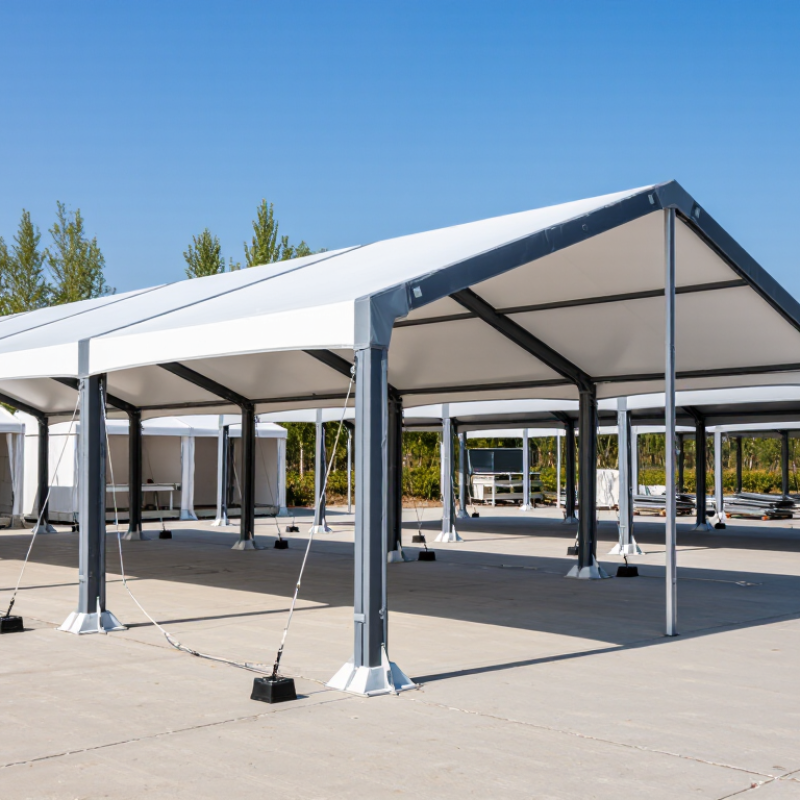
What Are the Best China Outdoor Canopy Manufacturers?

What Defines a Reliable China Outdoor Canopy Manufacturer?

A reliable China outdoor canopy manufacturer proves quality through repeatable work, not polished promises. The factory should explain its materials clearly, including frame alloy, fabric weight, coating thickness, and connector design. Ask for production samples before placing a large order. Inspect the welds, stitching, corner joints, and drainage points. Small defects often appear there first.

Experience matters on a windy installation site. A capable manufacturer should review the canopy’s size, anchoring method, local weather, and intended use. It should provide load information, test records, and clear assembly instructions. Factory quality control should cover incoming materials, frame dimensions, fabric cutting, sewing, packaging, and final inspection. Traceable batch records also make later problems easier to investigate. Communication should remain precise when drawings change.

No supplier is perfect. That matters. A reliable team admits a weak sample, explains the cause, and proposes a correction. Vague answers deserve caution. One overlooked detail, such as water collecting beside a seam, can damage an otherwise attractive canopy. Buyers should also check response times, replacement procedures, packaging strength, and export experience. Photos help, but independent inspections provide stronger evidence. A manufacturer earns trust when its documents, factory process, and delivered product tell the same story.

Which Types of Outdoor Canopies Are Made in China?

China’s outdoor canopy factories produce more than basic pop-up tents. Common types include folding canopies, high-peak pagoda tents, party tents, and large clear-span structures. Folding models use aluminum or steel frames, often with 3-by-3 or 3-by-6-meter footprints. They suit markets, exhibitions, cafés, and temporary storage.

Manufacturers also make retractable awnings, sail shades, carport canopies, and camping shelters. Clear-span systems can cover wider areas without interior poles, which helps event planners arrange tables and walkways. Many factories offer PVC-coated polyester, Oxford fabric, or solution-dyed acrylic. Fabric choice affects waterproofing, ultraviolet resistance, cleaning, and service life. The Freedonia Group’s World Awnings report separates residential and commercial awnings, reflecting these different performance requirements.

Demand is supported by wider outdoor-living growth. Grand View Research valued the global outdoor furniture market at approximately US$23.6 billion in 2023 and forecast a 5.2% compound annual growth rate from 2024 to 2030. That figure does not measure canopies alone, but it signals stronger demand for shaded outdoor spaces. In practice, specifications matter more than attractive photographs. Buyers should check wind ratings, seam construction, drainage, replacement parts, and fabric test reports. One weakness remains. Some listings use “waterproof” loosely, while performance may only mean water resistance. A careful factory audit and sample test are still necessary.

How to Evaluate China Outdoor Canopy Manufacturers

Evaluating China outdoor canopy manufacturers starts with evidence, not attractive catalog images. Ask for factory photos, production capacity, and recent project references. A reliable supplier should explain frame alloys, fabric grades, coating methods, and drainage design clearly. Request a material sample. Touch it. Check stitching, edge reinforcement, and color consistency under strong light. Small details often reveal production discipline.

Review engineering data before discussing price. The manufacturer should provide wind-load assumptions, anchoring options, relevant snow-load guidance, and installation drawings. Do not accept vague claims like “all-weather” protection. Ask how the fabric performs after ultraviolet exposure, repeated folding, and heavy rain. Independent test reports are useful, but verify their scope and dates. A document can look official and still answer the wrong question. That happened during one sourcing review.

Production control matters as much as design. Confirm whether cutting, welding, sewing, and packing are inspected at defined stages. Ask for dimensional tolerances and a replacement process for damaged parts. Communication is another practical test. Send a technical question and assess the response time, accuracy, and willingness to admit limitations. Order a prototype for unusual dimensions or printed panels. It costs more upfront. It may prevent expensive revisions. Compare manufacturers using the same checklist, including sampling time, packing quality, payment terms, and realistic delivery windows. The cheapest quotation is rarely the clearest one.

How to Evaluate China Outdoor Canopy Manufacturers

Suggested buyer-evaluation weights based on the performance, compliance, and service factors that most affect outdoor canopy purchasing decisions.

Product durability and weather resistance should receive the highest priority, including verified wind-load performance, UV resistance, waterproofing, and frame stability. Buyers should also request material specifications, test reports, factory quality-control procedures, certifications applicable to the target market, customization capability, lead-time records, and after-sales support. These percentages are a practical evaluation framework rather than ratings for any specific company.

What Manufacturing Standards and Services Should Buyers Check?

When comparing China outdoor canopy manufacturers, buyers should inspect manufacturing evidence, not polished photographs. The 2024 Grand View Research report valued the global outdoor furniture market at about USD 23.9 billion in 2023. Canopy demand sits within this broader category, where durability and documented quality increasingly influence purchasing decisions. Ask for an ISO 9001 certificate, current audit scope, and corrective-action records. An unverified certificate proves little. Check certificate numbers with the issuing body.

For fabric, request composition, UV-resistance results, waterproofing data, seam-strength tests, and flame-performance documentation. Applicable references may include ISO 4892-3 for accelerated weathering and ISO 1421 for coated-fabric tensile strength. NFPA 701 may apply to flame performance in some projects. For frames, demand alloy grades, weld inspection records, coating thickness, and corrosion testing. Wind calculations should match the installation location. Use local requirements and recognized standards, such as ASCE 7-22 or EN 1991-1-4. The 2023 ISO Survey reports over one million ISO 9001 certificates worldwide, yet certification alone does not guarantee canopy performance.

Service quality becomes visible after the deposit. Require stamped drawings, sample approval, installation guidance, packaging photos, spare-part support, and a clear warranty. A reliable supplier should explain wind limits, drainage details, replacement fabric lead times, and inspection intervals. Request a pre-shipment inspection by an independent laboratory when project risk is high. I would also test one complete canopy before ordering hundreds. That costs more. It can expose weak seams, confusing instructions, or optimistic delivery promises before they multiply. Do not overlook after-sales response times; they often reveal more than a showroom visit.

How to Select the Right China Outdoor Canopy Supplier

Choosing a China outdoor canopy supplier requires more than comparing online prices. A factory with repeated export experience usually understands packaging, weather exposure, and installation issues. Ask how long the supplier has produced canopies, not merely traded them. Request project photos, material specifications, and recent quality records.

Inspect the canopy sample carefully. Check seam stitching, frame joints, drainage points, and fabric coating under bright light. Ask for fabric weight, UV resistance, waterproof testing, and wind-load guidance. These details matter when a canopy stands beside a hotel entrance or covers an outdoor dining area. Confirm whether steel or aluminum parts have suitable corrosion protection. Request test reports from recognized laboratories, then verify that they match the actual materials.

Communication is another practical test. Send drawings with dimensions, colors, anchoring details, and delivery requirements. A reliable supplier should identify unclear points before production. Visit the factory when possible, or arrange a live video inspection. Confirm sample approval, inspection stages, replacement terms, and spare-part support in writing. A low quote may exclude packaging or installation hardware. I once underestimated those small costs; the final budget changed. No supplier is perfect. Still, careful questions reveal how a supplier handles problems before they reach your site.

What Are the Best China Outdoor Canopy Manufacturers? - How to Select the Right China Outdoor Canopy Supplier

Evaluation Dimension Practical Benchmark What to Verify Priority Selection Guidance
Product Type Pop-up, folding, pole, inflatable, or permanent-frame canopy Confirm intended use, installation frequency, transport method, and local weather exposure High Choose a supplier with proven experience in the exact canopy category required.
Frame Material Aluminum for lower weight; galvanized or powder-coated steel for higher load capacity Request alloy or steel grade, tube dimensions, wall thickness, weld quality, and corrosion treatment High Compare engineering specifications rather than judging frame quality by appearance alone.
Fabric Performance Common outdoor fabrics include polyester or PVC-coated polyester; UV, water, and mildew resistance should be specified Check fabric composition, weight, coating, seam construction, colorfastness, and test documentation High Ask for a fabric sample and written performance specifications before approving bulk production.
Wind and Load Rating Wind resistance depends on size, anchoring, frame design, and site conditions; no universal rating applies to every canopy Request test conditions, anchoring method, allowable use limits, and engineering calculations where applicable High Reject unsupported marketing claims and match the design to the actual installation environment.
Water Management A sloped roof, sealed or reinforced seams, gutters, and suitable fabric coating improve rain performance Inspect roof pitch, seam treatment, drainage design, and sample performance under simulated rain Medium For wet climates, prioritize drainage details over decorative roof shapes.
Customization Capability Possible options include dimensions, roof configuration, sidewalls, doors, windows, color, printing, and accessories Confirm drawing approval, artwork format, color reference, tolerance, and change-control process Medium Use a supplier that provides a technical drawing or pre-production sample for custom orders.
Safety and Compliance Compliance requirements vary by destination, venue, material, and intended application Identify applicable fire, structural, textile, chemical, and electrical requirements before production High Specify the destination market and request relevant reports from an identifiable testing body.
Quality Control Effective controls cover incoming materials, in-process assembly, printing, final inspection, and packing Ask for inspection checklists, defect standards, measurement records, and corrective-action procedures High Include measurable acceptance criteria in the purchase contract.
Sample and Prototype Process A physical sample can reveal fit, finish, color, packaging, and installation issues before mass production Confirm sample fee, sample lead time, revision policy, and whether the approved sample is retained as the reference Medium Approve a sample before committing to a large or complex order.
Production Lead Time Timing varies by product complexity, customization, season, material availability, and order quantity Obtain a written schedule covering sampling, material preparation, production, inspection, and dispatch Medium Build buffer time into the plan, especially before seasonal events or exhibitions.
Minimum Order Quantity MOQ may differ by frame type, fabric color, printing method, and customization level Request separate MOQs for standard, customized, printed, and mixed-size orders Low Select a flexible supplier when testing a new market or ordering multiple configurations.
Packaging and Shipping Packaging should protect frame parts, fabric, printed panels, and hardware during international transport Check carton strength, moisture protection, spare parts, package dimensions, gross weight, and shipping marks Medium Compare landed cost, not only the factory quotation or unit price.
After-Sales Support Useful support includes installation instructions, replacement parts, warranty terms, and response procedures Review warranty duration, exclusions, spare-part availability, and documented claim handling Medium Prefer suppliers that provide clear written support instead of informal promises.
Total Cost of Ownership Evaluate purchase price, freight, duties, setup labor, maintenance, replacement parts, and expected service life Request a complete quotation with specifications, tooling, packaging, shipping terms, and optional accessories itemized High Select the supplier offering the best verified value, not necessarily the lowest initial price.
Recommended selection method: Compare at least three qualified suppliers using the same specification sheet, request samples or technical drawings, verify test documentation, inspect production quality, and confirm the final commercial terms in writing.

FAQS

What types of outdoor canopies are commonly manufactured in China?

Common options include folding canopies, pagoda tents, party tents, and clear-span structures. Folding models often measure 3-by-3 or 3-by-6 meters. They suit markets, exhibitions, cafés, and temporary storage. Retractable awnings and camping shelters are also available.

Which canopy materials should buyers compare?

Common fabrics include PVC-coated polyester, Oxford fabric, and solution-dyed acrylic. Each material differs in waterproofing, ultraviolet resistance, cleaning, and service life. Check the fabric sample in strong light. Feel the coating and inspect its stitching.

Are clear-span canopies useful for large events?

Yes. Clear-span systems cover wide areas without interior poles. This leaves more room for tables, walkways, and seating. They can simplify event layouts. Anchoring still requires careful engineering.

How can buyers evaluate a factory before ordering?

Request factory photos, production details, and recent project references. Ask about frame alloys, fabric grades, welding, sewing, and drainage. Inspect a physical sample before discussing final quantities. Small details expose weak production control.

What technical documents should a supplier provide?

Request wind-load assumptions, anchoring options, installation drawings, and snow-load guidance. Ask for fabric strength, ultraviolet, waterproofing, and seam-performance data. Check testing dates and document scope. A certificate may answer the wrong question.

Does “waterproof” always mean complete rain protection?

No. Some listings use “waterproof” loosely. The fabric may only resist light water exposure. Ask for measured water-pressure results and seam-sealing details. Test the canopy during heavy rain conditions when possible.

What production controls deserve attention?

Confirm inspections during cutting, welding, sewing, and packing. Ask for dimensional tolerances and damaged-part replacement procedures. Review packaging photos before shipment. Poor packing can damage strong materials.

Should buyers order a prototype first?

A prototype is wise for unusual dimensions or printed panels. It costs more at the beginning. It may prevent expensive revisions later. I once trusted paperwork too quickly. That was a mistake. Testing one complete canopy can reveal weak seams, confusing instructions, or unrealistic delivery promises.

Conclusion

Choosing among China outdoor canopy manufacturers requires more than comparing prices. A reliable supplier should demonstrate consistent material quality, strong structural design, skilled production, transparent communication, and dependable delivery. Buyers may find various products, including folding tents, event shelters, warehouse canopies, parking covers, patio structures, and customized commercial solutions. When evaluating an Out Door Canopy manufacturer, review product specifications, fabric performance, frame durability, stitching or welding quality, production capacity, sample results, and previous export experience.

Buyers should also check manufacturing standards, quality-control procedures, packaging methods, warranty terms, customization services, and after-sales support. Clear drawings, accurate quotations, reasonable minimum order quantities, and efficient communication can help prevent misunderstandings. The right China outdoor canopy supplier should match the project’s intended use, climate conditions, budget, required dimensions, order volume, and delivery schedule. A careful comparison of samples, certifications, factory capabilities, and service commitments will support a safer and more successful purchasing decision.

Liam

Liam

Liam is a dedicated marketing professional with a profound expertise in the industry, where he excels at highlighting the unique advantages of our core products. With a keen understanding of market trends and consumer needs, Liam frequently updates our company’s professional blog, providing......