
Domi Domi

Top Beach Canopy Manufacturers for Global Buyers

Time:2026-11-10 Author:Aria
0%

Global buyers choosing a Beach Canopy need more than an attractive product photo. They need dependable shade, durable construction, and clear evidence behind performance claims. Demand sits within a large travel economy: UN Tourism’s January 2025 World Tourism Barometer reported approximately 1.4 billion international tourist arrivals in 2024. That figure does not measure beach equipment sales, but it signals the scale of travel activity that supports outdoor leisure products.

Safety and materials deserve equal attention. The World Health Organization’s Global Solar UV Index guide recommends sun-protection measures when the UV Index reaches 3 or higher, including seeking shade. For buyers, this makes fabric specifications, shade coverage, and usable design important questions—not decorative details. Ask manufacturers for test methods and documentation supporting ultraviolet-protection claims. Details matter. A canopy that looks sturdy in a catalog may behave differently when exposed to coastal wind, salt air, and repeated setup.

This guide compares manufacturers through practical criteria: frame materials, fabric options, production capacity, customization, quality-control processes, and communication with overseas customers. It also considers less visible details, such as replacement parts, packaging, and how clearly suppliers explain lead times. These factors can affect the buying experience as much as the quoted price. Still, published specifications cannot replace independent inspection or product testing, and buyers should verify claims against their own requirements. A perfect shortlist is unlikely. The goal is a more informed one: identifying suppliers whose evidence, manufacturing capabilities, and service offer a credible fit for global procurement.
Top Beach Canopy Manufacturers for Global Buyers

Understanding Beach Canopies and Their Global Market

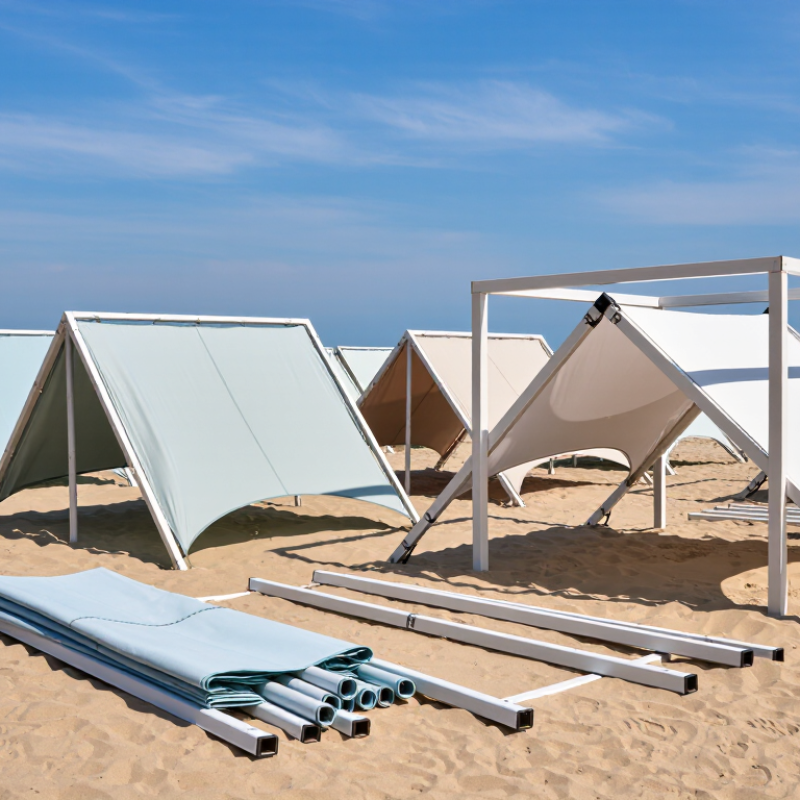
A beach canopy is a portable shade structure, usually built with a fabric top and a collapsible frame. It can make a hot stretch of sand more comfortable. Its protection depends on fabric coverage, construction, and how it is positioned. Check the product’s stated ultraviolet protection rating. A low canopy may shade a chair but leave legs exposed. Wind matters, too. Anchors and frame strength affect stability, though no portable design should be treated as storm-proof. Small details matter.

Global demand is linked to travel, leisure, and outdoor living, but reliable figures for beach canopies alone are difficult to isolate. UN Tourism reported about 1.4 billion international tourist arrivals in 2024, roughly 99% of 2019’s level. That signals renewed travel, not direct canopy sales. Grand View Research valued the wider outdoor furniture market at USD 50.7 billion in 2023 and projected 5.4% annual growth from 2024 to 2030. Canopies represent only one part of that category. The boundary is messy. Buyers comparing manufacturers should examine fabric specifications, frame materials, packed size, repair options, and test documentation. A sales claim is not a test result; ask what the data actually covers.

Beach Canopy UV Protection Benchmarks

UPF rating thresholds provide a practical benchmark when comparing canopy fabrics for sun protection.

Under the AS/NZS 4399 classification, UPF 15–24 is rated Good, 25–39 Very Good, and 40 or higher Excellent. A higher UPF means less UV radiation passes through the fabric.

How Leading Beach Canopy Manufacturers Differ

Leading beach canopy manufacturers differ less by catalog claims than by what they test, document, and reproduce. A fabric swatch is not enough. AATCC TM183 measures ultraviolet transmission through textiles. WHO and the International Agency for Research on Cancer estimated 330,000 new melanoma cases worldwide in 2022. That figure does not measure canopy performance, but it underscores why verified shade coverage matters.

Compare frame engineering next. Ask for alloy grade, tube thickness, joint details, corrosion testing, and a wind rating with its test method. Numbers without conditions can mislead: a canopy tested in a lab may behave differently in loose, wet sand. Check whether ribs and hubs are replaceable, and whether the fabric can be changed without discarding the frame. Small details count.

Manufacturers also differ in consistency and how clearly they describe limits. Request batch-level fabric reports and UV results after weathering. AATCC TM183 alone does not prove resistance to fading, tearing, or wind. Question impressive UPF claims if the report covers fabric only, not seams or the finished canopy. I would compare package weight, carton dimensions, and lead-time records too. Not glamorous. Buyers may discover weak points after the first season, not in the sample room.

Key Features and Standards to Compare

For global buyers, canopy comparisons should begin with measurable protection, not beachside photos. Ask suppliers for fabric composition, UV test results, and the method used to determine any UPF rating. A label alone is not enough. Check whether testing covers the finished fabric, including seams and areas that may stretch in use. Also compare water resistance and colorfastness, especially for canopies exposed to salt spray and strong sun. Details matter.

Frame design affects setup and service life. Compare pole materials, joint construction, and corrosion testing, then ask how replacement parts are supplied. A light frame is easier to carry, but may feel less stable in gusts. Heavier is not always better. Request wind-test conditions rather than relying on broad claims; sand, anchoring method, and canopy size can change performance. Inspect stitching, edge reinforcement, and vent placement in product samples. These small features often show more than a polished catalogue image.

For international orders, confirm dimensions, packed weight, carton strength, care instructions, and warranty terms in writing. Standards and test methods can differ by market, so request dated reports from a qualified laboratory and verify that they match the exact model. One awkward point remains: test results cannot predict every beach. Buyers should compare documented performance with realistic use, not assume any canopy is storm-proof.

Evaluating Manufacturers for Quality and Reliability

Reliable beach canopy sourcing starts with evidence, not polished product photos. Ask manufacturers for fabric test reports showing ultraviolet protection, colorfastness, and seam strength. The WHO and World Meteorological Organization’s Global Solar UV Index guide identifies UV Index 3 as the point when sun protection is needed. A canopy’s shade can help, but reflected sunlight and changing sun angles still matter.

Small details matter. Check whether test results identify the exact fabric and coating, rather than a similar material. A report without traceable sample details is weak evidence.

Assess the frame under realistic conditions. Request material specifications, corrosion-test results, and documented checks of joints, stitching, and opening mechanisms. Ask how production batches are inspected and how defects are recorded. ISO 9001 certification can indicate a managed quality system, but it does not prove that a particular canopy meets performance claims.

Ask for proof. For a sample order, inspect the canopy after repeated opening, folding, and exposure to moisture. Compare delivered materials with the approved sample. Wind performance deserves careful review; a shade structure may fail if users treat it as storm protection. Manufacturer data should state test conditions and limitations clearly. Not every supplier provides enough detail, and that gap deserves follow-up.

Choosing a Supplier for International Orders

For international orders, supplier selection should begin with the exact use case. A resort terrace and a temporary event site need different canopy sizes, frame strengths, and packing plans. Request product drawings, material details, and documented test results where relevant. Check that the sample matches the fabric color, stitching, joints, and included hardware you expect. Small differences matter.

Ask how the supplier manages export packing and shipment coordination. Confirm carton dimensions, order quantities, production lead times, and who prepares shipping documents. These details affect freight costs and delivery schedules. Import duties and local requirements can vary, so verify them with a qualified customs professional before placing a large order. Get key commitments in writing. It helps.

Communication is part of quality control. Notice whether answers are specific, especially when you ask about delays, replacement parts, or inspection procedures. A factory visit may not be practical, but a pre-shipment inspection can help confirm quantities and visible workmanship. No supplier is perfect. A sample is useful, yet it cannot show every variation across a full production run. Build time into the schedule for checks and corrections, rather than assuming everything will arrive exactly as pictured.

FAQS

What is a beach canopy?

It is a portable shade structure with a fabric top and collapsible frame. Handy on hot sand.

Does a canopy protect everyone from the sun?

Not necessarily. Protection depends on fabric coverage, its stated ultraviolet rating, and how the canopy is positioned. A low canopy may shade a chair but leave legs exposed.

Can a portable canopy handle strong winds?

Anchors and frame strength affect stability, but no portable design should be treated as storm-proof. Wind can change quickly.

What should buyers check when comparing suppliers?

Review fabric specifications, frame materials, packed size, repair options, and test documentation. Ask what each test actually covers.

Why are market figures for beach canopies hard to find?

Canopies are only one part of broader outdoor markets. Travel figures and outdoor furniture forecasts suggest context, not direct canopy sales.

What should international buyers confirm before ordering?

Request drawings, material details, and relevant test results. Check the sample’s color, stitching, joints, and included hardware.

Which shipping details can affect costs and schedules?

Confirm carton dimensions, order quantities, production lead times, and responsibility for shipping documents. Small details matter.

How can buyers check a production order before shipment?

A pre-shipment inspection can confirm quantities and visible workmanship. Samples help, but they cannot show every variation in a full production run.

Should buyers rely on verbal promises about delivery or replacement parts?

Get key commitments in writing, and ask specific questions about delays and replacement parts. Leave time for checks. It may still go wrong.

Conclusion

Beach canopies serve a growing range of needs, from family trips and outdoor events to commercial beach use. As demand varies across regions, buyers should understand how manufacturers differ in materials, design, production capacity, and customization options. Comparing these factors helps identify suppliers whose products suit the intended climate, usage, and budget.

When evaluating a Beach Canopy, consider fabric durability, frame strength, UV protection, wind resistance, ease of setup, and clear quality standards. Reliable manufacturers should provide consistent product information, samples or inspection options, and responsive communication. For international orders, also assess production timelines, packaging, shipping arrangements, and after-sales support. A careful review of both product performance and supplier reliability can help global buyers make informed choices and build dependable long-term partnerships.

Aria

Aria

Aria is a dedicated marketing professional with a deep passion for innovative strategies and a keen understanding of our company's product offerings. With a wealth of experience in the industry, Aria excels at crafting engaging content that highlights the unique features and benefits of our......