
Domi
China has become a major manufacturing hub for Camping Equipment sold across global markets. Its supplier network covers tents, sleeping bags, portable stoves, camp furniture, lighting, and weather-resistant accessories. Yet production scale alone does not guarantee dependable quality.
Reliable suppliers usually show more than attractive catalog images. They provide material specifications, factory details, testing records, and consistent product samples. Buyers should inspect stitching, zipper strength, fabric coatings, frame joints, and packaging before placing large orders. A tent may look excellent online but feel fragile in heavy rain.
Experience matters here.
Outdoor industry expert and Patagonia founder Yvon Chouinard once said, “The more you know, the less you need.” This idea applies directly to equipment sourcing. Knowledge helps buyers choose practical designs instead of unnecessary features. It also encourages suppliers to improve durability, repairability, and responsible material use.
The best Chinese suppliers understand different outdoor conditions. Alpine buyers may need low-temperature insulation and stronger poles. Campers in humid regions may prioritize ventilation, mold resistance, and quick-drying fabrics. Family users often value easy setup and safe, stable structures.
Certifications can support trust, but paperwork should not replace physical inspection. A supplier may hold impressive documents and still deliver inconsistent batches. That uncomfortable possibility deserves attention.
This guide examines China’s leading Camping Equipment suppliers worldwide. It considers manufacturing capability, product performance, customization, communication, quality control, and export experience. The ranking cannot remove every sourcing risk. However, careful comparison can make purchasing decisions clearer, safer, and more dependable.
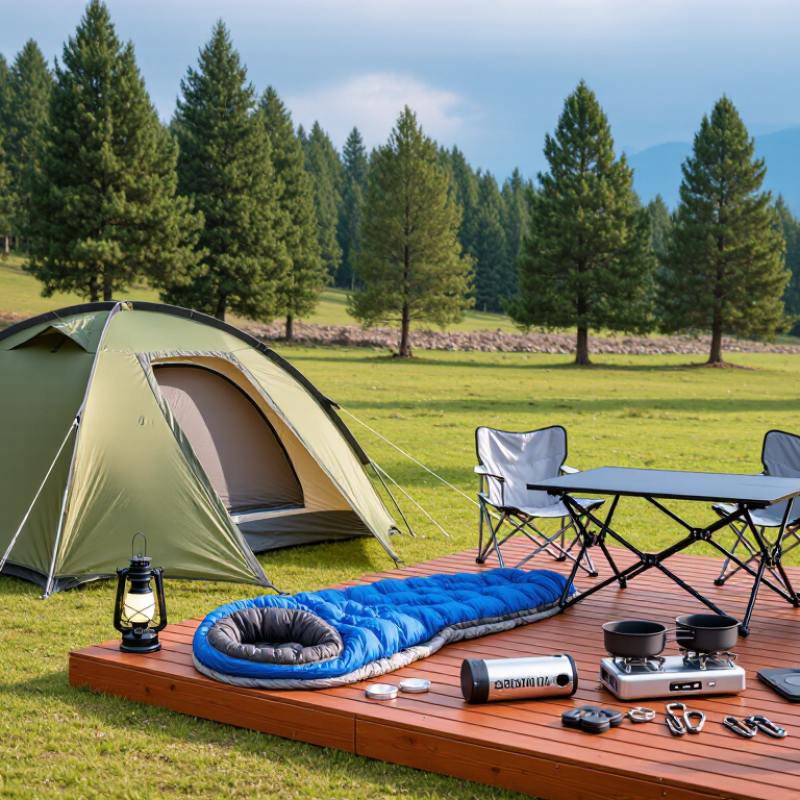
China Best Camping Equipment Suppliers Worldwide
What Defines a Leading Chinese Camping Equipment Supplier
A leading Chinese camping equipment supplier is defined by more than low pricing or a large catalog. It combines field experience, disciplined engineering, and transparent production control. Teams should understand how a tent behaves in wind, rain, and repeated packing. They should also explain product limits clearly. Overstated claims damage trust quickly.
Reliable suppliers provide material specifications, test records, and traceable batch information. For tents, buyers should review fabric denier, coating performance, seam construction, pole strength, and repair options. Sleeping bags need credible temperature testing, filling details, and consistent sizing. Samples should be checked outdoors, not only under showroom lights. Small faults often appear after wet setup or several folding cycles.
Professional communication matters just as much. A capable supplier confirms drawings, tolerances, packaging, inspection points, and delivery schedules in writing. It responds to defects with evidence and corrective action, rather than vague promises. Factory visits or independent inspections can verify workplace processes and final quality. No supplier is perfect. A zipper may still fail, or a color may vary slightly between batches. The important measure is whether the team records the problem, improves the process, and reports honestly. That habit builds authority over time.
This procurement benchmark highlights the main factors commonly used by international buyers when evaluating Chinese camping equipment suppliers. Product quality and manufacturing capacity carry the greatest weight, while compliance, customization, logistics, and after-sales support complete the supplier assessment.
Benchmark weighting: 100% total evaluation score; intended for supplier comparison and purchasing planning.
China’s camping equipment sector serves wholesalers, outdoor retailers, and project buyers across many markets. Key categories include tents, sleeping bags, backpacks, cooking tools, lighting, furniture, and outdoor clothing. Tents range from compact two-person shelters to spacious family models. Factories commonly offer polyester or nylon fabrics, aluminum poles, waterproof coatings, and repair parts. A reliable supplier should provide test reports, material specifications, samples, and clear production schedules. These details help buyers compare quality beyond attractive catalog photos.
Sleeping systems form another major category. Buyers can source sleeping bags, inflatable mattresses, folding beds, and insulated mats. Temperature ratings need careful review because testing methods may differ between suppliers. Cooking equipment includes portable stoves, cookware, tables, and storage containers. Safety documents and stable fuel compatibility deserve attention. Lighting products often include lanterns, headlamps, and rechargeable power units. Check battery information, charging ports, brightness claims, and water-resistance ratings before ordering. Small omissions can create costly field problems.
Tips: Request a physical sample before bulk production. Test zippers, seams, pole joints, and pack weight yourself. Ask for inspection records and packaging photos. Confirm carton dimensions for shipping calculations. Do not judge suppliers only by low pricing. That approach can fail. Leave room for improvement, because one sample may not represent every production batch.
China Best Camping Equipment Suppliers Worldwide
China’s camping equipment industry is concentrated in several manufacturing regions. Zhejiang is known for tents, sleeping bags, folding furniture, and coated fabrics. Many factories there operate cutting, sewing, printing, and waterproofing lines under one roof. Jiangsu has strong textile and synthetic material capabilities, especially for insulation layers and durable outdoor fabrics.
Guangdong focuses on hardware, plastic components, lighting accessories, and compact camping tools. Its suppliers often provide injection molding, aluminum processing, surface finishing, and assembly services. Fujian is useful for backpacks, soft storage, outdoor clothing, and sewn accessories. During factory visits, buyers should inspect seam quality, zipper alignment, fabric coating, and carton protection. Small details often reveal production discipline.
Reliable suppliers usually support sample development, material certificates, inspection reports, and controlled pre-shipment checks. However, capability claims still require verification. A polished showroom proves little. Ask for recent production samples, equipment lists, testing records, and clear lead-time commitments. I have found that communication speed can hide weak technical understanding. A supplier may answer quickly but miss requirements for pole strength, ventilation, load limits, or water resistance. Another common mistake is choosing the lowest quotation without checking fabric weight and hardware grade. The cheaper option may create higher replacement costs. Supplier selection should match the product’s climate, user conditions, packaging needs, and expected order volume.
China Best Camping Equipment Suppliers Worldwide
Evaluating a Chinese camping equipment supplier requires more than checking photographs. During factory visits, inspect seam sealing, fabric coating, zipper movement, and frame alignment. Ask for batch records and production samples, not only polished prototypes. ISO 9001 helps assess quality management, but it does not prove that a tent is waterproof or safe. The ISO Survey 2023 recorded 1,265,216 valid ISO 9001 certificates worldwide, showing its wide use, but also its limits.
Request test reports from independent laboratories. For tents, review hydrostatic pressure, wind resistance, flame behavior, and stitching strength. For sleeping bags, check thermal performance under ISO 23537 testing methods. Certifications should match the product and destination market. Material declarations can support REACH compliance, while child-related products may require additional testing under applicable safety rules. A supplier avoiding clear traceability deserves caution. Small details matter.
Tips: Compare three recent production batches. Measure fabric weight, coating thickness, packed size, and finished dimensions. Ask whether reports belong to the current factory and material specification. Verify laboratory accreditation before accepting results. A certificate may be genuine but outdated. I once trusted a sample too quickly; the bulk fabric felt thinner and compressed poorly. That mistake still influences my audits. Leave room for re-testing, because production consistency is often less perfect than the sales presentation.
| Evaluation Dimension | Weight | What to Verify | Relevant Standards or Regulatory References | Acceptable Evidence | Scoring Guide |
|---|---|---|---|---|---|
| Product Design and Intended Use | 15% | Confirm that specifications match the intended climate, season, occupancy, load, and user group. | Product-specific technical specifications; ISO 5912 for camping tents; ISO 23537 for sleeping bags, where applicable. | Approved drawings, bill of materials, product specification sheet, risk assessment, and documented design revisions. | 0–5 points |
| Material Quality and Traceability | 15% | Check fabric composition, coating type, denier, tear strength, seam tape, hardware, corrosion resistance, and material consistency. | ISO 811 for hydrostatic pressure testing; ISO 13937 series for tear properties; applicable textile and chemical regulations. | Incoming inspection records, raw-material certificates, batch numbers, supplier declarations, and retained samples. | 0–5 points |
| Performance Testing | 12% | Evaluate waterproofness, wind resistance, tensile strength, seam strength, insulation, durability, and functional performance. | ISO 5912 for camping tents; ISO 23537 for sleeping bags; ISO 811 for resistance to water penetration; relevant ASTM or EN methods when contractually specified. | Independent laboratory reports dated within the agreed review period, internal test records, and corrective-action reports. | 0–5 points |
| Quality Management System | 12% | Assess documented procedures for purchasing, production control, inspection, nonconformity management, and continual improvement. | ISO 9001 quality management system requirements. | Valid certificate issued by an accredited certification body, audit scope, surveillance status, quality manual, and process records. | 0–5 points |
| Factory Production Controls | 10% | Review cutting, sewing, welding, coating, assembly, packing, calibration, and final inspection controls. | Documented inspection and test plans; applicable product standards and agreed customer specifications. | Process flow chart, control plan, operator instructions, calibration certificates, defect records, and final inspection reports. | 0–5 points |
| Product Safety and Chemical Compliance | 10% | Identify restricted substances, fire risks, sharp edges, entrapment hazards, labeling requirements, and foreseeable misuse. | EU REACH Regulation (EC) No 1907/2006; destination-market product safety laws; applicable flammability requirements. | Chemical test reports, safety data sheets, restricted-substance declarations, hazard analysis, labels, and user instructions. | 0–5 points |
| Environmental Management | 8% | Evaluate energy use, wastewater, emissions, waste handling, packaging materials, and environmental objectives. | ISO 14001 environmental management system requirements; applicable local environmental permits and regulations. | Valid certificate, environmental permits, waste-transfer records, energy data, wastewater test results, and improvement plans. | 0–5 points |
| Worker Health and Safety | 8% | Check workplace risk assessments, personal protective equipment, emergency procedures, training, and incident management. | ISO 45001 occupational health and safety management system requirements; applicable labor and safety laws. | Valid certificate, safety inspection records, training logs, emergency drills, accident statistics, and corrective actions. | 0–5 points |
| Social and Ethical Production | 5% | Review working hours, wages, forced-labor prevention, child-labor prevention, grievance channels, and subcontracting controls. | Applicable labor laws; buyer-specific supplier codes; internationally recognized labor principles. | Recent social-audit report, worker policy, payroll sampling, age-verification procedure, grievance records, and subcontractor list. | 0–5 points |
| Supply Capacity and Delivery Reliability | 5% | Assess production capacity, lead time, minimum order quantity, raw-material availability, packaging capability, and contingency planning. | Contractual delivery requirements; documented production-planning and inventory-control procedures. | Capacity statement, production schedule, historical on-time-delivery data, inventory records, and business-continuity plan. | 0–5 points |
| Total Evaluation Weight | 100% | Recommended calculation: Weighted Score = (Supplier Score ÷ 5) × Dimension Weight. | |||
China offers a broad camping equipment supply base, but “best” depends on your product brief, target market, and risk tolerance. Experienced buyers usually begin with factory audits, sample reviews, and material verification. Ask for fabric denier, coating performance, seam construction, zipper quality, and packed dimensions. A clear specification sheet reduces costly misunderstandings.
Customization can include colors, logos, carton design, bundled accessories, and small structural changes. However, every change may affect tooling, testing, minimum order quantities, or delivery dates. Request a pre-production sample before approving bulk production. Pricing should be compared item by item, not by unit price alone. Include sampling, packaging, inspection, inland transport, freight, insurance, duties, and possible port charges. A surprisingly cheap quotation may exclude essential services.
Global shipping needs careful planning. Confirm the trade term, loading port, estimated production schedule, carton measurements, and document requirements. For urgent seasonal goods, reserve freight capacity early and maintain a realistic buffer. Delays happen. Good suppliers provide traceable updates and consistent quality records, yet buyers must verify claims independently.
Tips: Use a written quality checklist. Test products in realistic outdoor conditions, including rain, wind, abrasion, and repeated packing. Keep payment milestones linked to approved samples and inspection results. Do not assume one successful order guarantees every future batch. A small pilot order may reveal weaknesses before they become expensive.
Reliable suppliers combine field experience, engineering discipline, and transparent production control. They explain product limits honestly. No supplier is perfect.
Check fabric denier, coating performance, seam sealing, pole strength, zipper movement, and repair options. Test outdoors. Wet setup reveals hidden weaknesses.
No. Request current production samples, batch records, and independent test reports. Showroom lighting can hide uneven stitching or thin fabric.
Tent testing should cover water pressure, wind resistance, flame behavior, and stitching strength. Sleeping bags need credible thermal testing and consistent sizing.
No. They indicate management procedures, not complete waterproofing or thermal performance. Verify product-specific reports and laboratory accreditation separately.
Confirm drawings, tolerances, materials, packaging, inspection points, delivery dates, and defect procedures. Written details reduce costly misunderstandings.
Custom colors, packaging, accessories, or structural changes may affect tooling, testing, order quantities, and delivery. Approve a pre-production sample first.
Compare sampling, packaging, inspection, inland transport, freight, insurance, duties, and port charges. A low unit price may exclude essential services.
Reserve seasonal freight early and keep a realistic schedule buffer. Link payments to approved samples and inspection results. Delays happen.
A small pilot order can expose weak zippers, poor compression, or inconsistent colors before large spending. One successful order proves little.
China has become a major source of Camping Equipment for buyers worldwide, supported by experienced manufacturers, flexible production capabilities, and extensive supply chains. A leading supplier typically combines reliable product development, efficient manufacturing, consistent quality control, and responsive customer service. Key product categories may include tents, sleeping bags, camping furniture, cooking accessories, lighting products, storage solutions, and outdoor safety essentials. Manufacturing regions vary in specialization, allowing suppliers to support both large-volume orders and smaller customized projects.
When evaluating suppliers, buyers should review material quality, factory management, testing procedures, certifications, and compliance with destination-market requirements. Clear communication about product specifications, customization options, minimum order quantities, packaging, lead times, and pricing is equally important. Buyers should also consider sample approval, production inspections, payment terms, shipping methods, and import documentation before placing an order. By comparing supplier capabilities and total purchasing costs rather than focusing only on unit price, international customers can build dependable sourcing partnerships and receive suitable Camping Equipment efficiently and consistently.
